The North American Hockey Legends held an exhibition game on April 13th to raise money for victims of Hurricane Sandy in New Jersey.
At the Prudential Center in Newark, New Jersey former players for the New Jersey Devils and other former hockey legends played an exhibition game against Russian Hockey Legends to raise money for charity. In all they were able to raise more than $50,000 with an attendance of 6,000.
Each member of the North American team sported special jerseys for the event; the words New Jersey appeared on the jerseys with Sandy 2012 emblazoned below them, also featuring two hurricane flags as part of the design. The North American team stayed to colors worn by the New Jersey Devils and each player wore a black stripe that highlighted different municipalities that were hard hit by Hurricane Sandy throughout the state. Jerseys worn by the players were auctioned off live at the event, with play Brian Leetch's jersey raising more than $2,200 for Hurricane Sandy relief.
The game itself resulted in a win for the Russians of 7-6, despite North America coming back from a 6-2 deficit in the third period. But the result of the game was not what was important to the players or those in attendance; the point was to raise money to help those in need and in this way it was a great success.
For more information on the charity exhibition you can read the article from Bleacher Report.
Wednesday, April 17, 2013
Thursday, April 4, 2013
Hurricane Sandy Transitional Housing Program to End
Federal shelter assistance will end May 1st for those who were displaced by Hurricane Sandy.
It was announced today by Governor of New Jersey Chris Christie that the Transitional Sheltering Assistance program that was instituted by FEMA (Federal Emergency Management Agency) after Hurricane Sandy collided with the state will end May 1, 2013. This decision to institute the final extension sought by the State is a result of exhaustive casework that concluded almost all of those who were participating in the program will have secured solutions for long-term housing by that date.
In the wake of Hurricane Sandy there has been an intensive outreach program that has involved phone calls, electronic notifications and communications, as well as counseling in person for those who required housing solutions. Of the roughly 5,500 families that were displaced in New Jersey, roughly only 219 residents remain displaced, and both the Governor and FEMA believe that they will be able to find housing for them.
Said Governor Christie, in a statement issued today:
Over the course of the federal assistance programs, 435 hotels participated in the Transitional Sheltering Assistance program with 253,425 room nights being provided with a stay of an average of 31 days. Once the program has concluded the total cost is expected to be just below $34 million.
You can read more about this program through the official statement made by the State of New Jersey.
It was announced today by Governor of New Jersey Chris Christie that the Transitional Sheltering Assistance program that was instituted by FEMA (Federal Emergency Management Agency) after Hurricane Sandy collided with the state will end May 1, 2013. This decision to institute the final extension sought by the State is a result of exhaustive casework that concluded almost all of those who were participating in the program will have secured solutions for long-term housing by that date.
In the wake of Hurricane Sandy there has been an intensive outreach program that has involved phone calls, electronic notifications and communications, as well as counseling in person for those who required housing solutions. Of the roughly 5,500 families that were displaced in New Jersey, roughly only 219 residents remain displaced, and both the Governor and FEMA believe that they will be able to find housing for them.
Said Governor Christie, in a statement issued today:
"FEMA’s Transitional Sheltering Assistance Program has been invaluable in giving Sandy-displaced families the time they need to find a safe, suitable housing solution that works for them. Now, six months after Sandy’s landfall, we are able to conclude the program with an effort to help the last remaining families solidify a long-term housing solution. I thank FEMA for their work with us to keep this program running as long as was required to secure the best possible housing options displaced families, and bring a successful close to the program.”
Over the course of the federal assistance programs, 435 hotels participated in the Transitional Sheltering Assistance program with 253,425 room nights being provided with a stay of an average of 31 days. Once the program has concluded the total cost is expected to be just below $34 million.
You can read more about this program through the official statement made by the State of New Jersey.
Wednesday, March 20, 2013
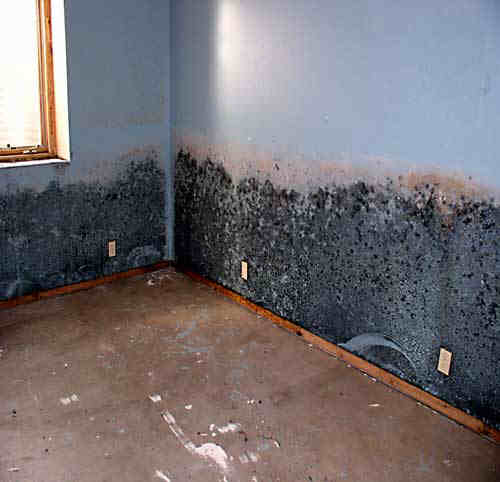
Mold Concerns Remain After Hurricane Sandy
Five months after
Hurricane Sandy made landfall and as the restoring and rebuilding efforts are
more or less under way, there is still what maybe a lingering public health
issue potentially affecting everyone repairing their homes. Julian Omidi
discusses the efforts to address this problem, as well as the health concerns.
With all of the problems that Hurricane Sandy left in its
destructive wake, there is one that is not readily detectable but may have
consequences that could endure even after much of the devastation has been
cleared: mold.[1]
Even the buildings that did not suffer particularly grievous
structural damage were nonetheless saturated with water. The moist environment
coupled with the spores lingering in the atmosphere left a perfect breeding
ground for mold, which is believed to aggravate certain chronic respiratory
conditions such as asthma, although there is as yet no conclusive research proving
that mold in itself is a major threat to health. Allergy and asthma sufferers
may nevertheless find that their symptoms are more acute than they typically
are, and will therefore find it difficult to breathe and sleep in mold-infested
environments.
Nonetheless, it has been found that moldy conditions do seem
to worsen allergies, and people with compromised immune systems due to severe
existing illnesses may be in danger of weakening further if persistently
exposed to mold.
Getting federal relief funds for mold removal can be tricky.
FEMA does allot some money for the remediation of mold, but only after its
presence has been visually verified by an inspector from the agency. However,
even though the mold may be lurking invisible beneath the surface, it cannot
necessarily be spotted for, sometimes, many months.
Funding for mold removal for Hurricane Sandy victims will
partly come from the federal allotment and partly from private donations. The
American Red Cross and The Robin Hood Foundation are expected to contribute a
significant portion. The $15 million is expected to be disbursed among the
2,000 structures that have already been overtaken with advanced levels of mold
since the hurricane.
There are initiatives under way to help homeowners handle
mold on their own. Residents can take free courses on the best ways to clean up
mold using household soaps and solvents, as well as tips on how to hire professional
mold remediation companies to remove it, since New York State doesn’t issue
licenses to professional mold removers, and therefore doesn’t have an
established set of standards for such companies.
[1]
Maslin-Nir, Sarah: Questions Emerge About the Mold that Hurricane Sandy Left
Behind New York Times 3/1/2013 http://www.nytimes.com/2013/03/02/nyregion/response-to-post-hurricane-sandy-mold-is-questioned.html?ref=health
Monday, March 11, 2013
Discrepancies Over Billing During Hurricane Sandy Power Outages
New Jersey residents
whose homes were damaged or destroyed by the force of Hurricane Sandy have
begun to receive utility bills that reflect power usage that would have been
flat-out impossible, considering not only the power outages, but also the fact
that many of the homes and businesses were uninhabitable after the storm.
Many New Jersey residents are reporting utility bills that
don’t seem to reflect the amount of power that is being used. In fact, many of these bills from Jersey
Central Power & Light seem to be grossly inflated, since the residences for
which the power usage was estimated were knocked from the foundations and therefore
uninhabitable[1].
The billing practice for Jersey Central Power & Light
(as well as other power companies) is to estimate the amount of power that
should have been used during a particular time frame and bill the customer
based on that assessment. What JCP & L failed to take into account was that
the amount of power used by many New Jersey inhabitants post-hurricane was
significantly less than what it ordinarily would have been. A woman who lives
in Seaside Park received a series of utility bills from the months of October
through February for the same pre-hurricane amount, only she hadn’t been in her
home in two months. When she contacted JCP & L, she was told by a service
representative that the billing would take approximately 30 days to resolve.
JCP & L has told residents who have received erroneous
bills that they are free to call their help line for assistance, but hasn’t yet
issued a statement regarding the billing practices. Recently, JCP & L
announced their plans to implement a 4.5 percent rate increase in order to pay
for the restoration and repair of the utility lines that had fallen during the
storm.
It is estimated that 10,000 homes in Ocean County are still
unoccupied, and many of the owners are still receiving estimated utility bills.
The inaccurate bills, combined with the intent to raise the
rates, have caused outrage among many New Jersey residents, who don’t believe
that the service that they received after the storm merited a rate hike.
Power
wasn’t fully restored for weeks after the storm for many home and business
owners, and the communication within the utility company was so poor that the
field representatives didn’t even know where the outages were, in spite of
local officials notifying of the locations. According to Robbinsville Mayor
David Fried, many officials will try to appeal the rate hike request, and try
to lobby for the option of choosing the power company for the region, rather
than having a power supplier assigned without negotiation.
[1]
Friedman, Alexi: Some Hurricane Sandy-Affected Residents Report ‘Wildly
Inaccurate’ Electric Bills 3/4/2013 The Star Ledger http://www.nj.com/business/index.ssf/2013/03/some_hurricane_sandy-displaced.html
Tuesday, March 5, 2013
Will New Jersey Residents See an Increase in Rates After Hurricane Sandy?
Although it has been
nearly four months since Hurricane Sandy struck the East Coast, the after
affects are still being felt. One of those after effects includes a rate hike
for electric services, something citizens and public officials both object to.
Jersey Central Power & Light announced that it plans to
implement a 4.5 percent rate increase in order to make up for the lost revenue
from the power restoration from Hurricane Sandy. The rate increase would amount
to approximately $53 more per year for the average customer using 650 kilowatt
hours per month.[1]
New Jersey public officials object to the rate increase,
saying that the restoration of power for many residents was unacceptably slow. Several
New Jersey Mayors plan on filing an official objection with the state Board of
Public Utilities. According to Mayor Bettina Bieri, Mayor of West Milford, “To
get a rate hike while we see no improvement to their service … we feel that’s
just a slap in the face to ratepayers.”
Of the 2 million New Jersey residents left without power,
approximately 1.1 million are customers of Jersey Central Power & Light. Full
electrical power wasn’t restored to the state until the end of November 2012,
nearly one month after the storm made landfall.
New Jersey residents who were deprived of power had to
improvise methods of keeping warm and fed. Some residents had to heat food on
their back yard barbeques, while others had to walk to obliging homes whose
power had been restored to shower and charge their cellular phones. Babies that were not accustomed to sleeping
under blankets had to sleep wearing layers and layers of pajamas. One resident
reported using her car battery to charge her cellular phone.[2]
Jersey Central Power & Light reportedly replaced 6,700
utility poles and cut down 65,000 trees, more than twice the typical amount
replaced on an annual basis. Additionally, the rate hike is meant to cover the
expenses for the salaries and room and board for of all of the additional
workers brought in from across the country.
The utility company also announced its plans to use $200
million to reinforce and expand the infrastructure.
JCP & L currently has the lowest residential rates of
all four power companies operating in New Jersey. Nevertheless, in the
post-hurricane economic climate, many residents will find the rate increase difficult
to bear.
[1]
Ensslin, John, C: JCP&L Rate-Hike Angers North Jersey Mayors NorthJersey.com 2/23/2013 http://www.northjersey.com/news/JCPLratehike.html?page=all
[2]
Gross, Doug; Le Trent, Sarah: Powerless in New Jersey Post Sandy 11/3/2013 CNN http://www.cnn.com/2012/11/02/living/sandy-new-jersey-color
Wednesday, February 27, 2013
Policy Holders Still Waiting for Payouts on Insurance After Hurricane Sandy
It appears that the victims of Hurricane Sandy have to jump
quite a few unexpected hurdles before receiving their flood insurance claims. Even
four months after the landfall of Hurricane Sandy, victims are still struggling
to receive reimbursement from their flood insurers.
Insurance provisions can be extremely confusing; and policy
holders in New Jersey are wondering if this wasn’t a deliberate decision by
insurance companies in order to delay payouts. In some cases, according to an article in the Star-Ledger [1], the
payments were delayed for so long that they are no longer sufficient to cover
the damage combined with the expenses of temporary living. Many residents have
found that the payments that were promised them have been significantly lowered
without explanation.
While many policy holders were under the impression that
they had purchased full coverage; coverage that would pay for the entire loss
of their $200,000 homes along with $60,000 worth of belongings. However, that
amount doesn’t take into account the common practice of deducting the amount of
property depreciation. So, if the home’s original purchase price $200,000, and
the homeowner purchases the maximum amount of flood insurance, the payout isn’t
automatically $200,000. Should the claim be approved, the payout will be minus
the deductible, as well as minus the property depreciation.
If the payout is given at all. Of the more than 140,000 claims
submitted for reimbursement, only 66 percent have been closed; and the fact
that the claim has been closed is no guarantee that payment has been issued. Thus
far, 5,900 have been closed without having been paid out.
FEMA has reportedly given incentives to the private insurers
that handle the flood insurance on FEMA’s behalf; FEMA withholds payments to
the insurance companies until the claims are closed out and paid. However, the
FEMA auditing process is strict, and if the auditors have determined that
overpayments were made, then the money is taken back from the insurer directly.
Recouping flood insurance benefits has turned into a
full-time job for many hurricane victims.
Policy holders often have to leave several messages for their adjusters
before their calls are returned; and not all of them even are.
The promised flood insurance payouts that might have
sufficed two months ago are no longer acceptable for many victims that have had
to seek shelter in hotels and motels. In order to cover the mounting living
expenses, hurricane victims have had to dip into their retirement accounts. There
are not only the hotel/motel bills to contend with, there are the expenses of
travelling to work or school from sometimes distant locations, as well as the
cost of eating out, since most hotel rooms are not equipped with kitchen areas.
When purchasing disaster insurance of any kind, make certain
that you go over all of the provisions with your adjuster thoroughly. If you
are unsure of the meaning of any part of your policy, ask your adjuster to
clarify it for you; if he or she is unable to do so, do not purchase it.
Make a list of all of the valuables in your home, along with
the original purchase price, date of purchase and serial numbers. It is a good
idea to scan the list, along with all other important documents and either
email them to yourself or subscribe to a data recovery service; in the event a
disaster that destroys your property and possibly your computer and your files,
you will still be able to access your paperwork.
[1]
Beeson, Ed: Hurricane Sandy Flood
Insurance Claims: An Exercise in Exasperation, Homeowners Say
2/24/2013 http://www.nj.com/business/index.ssf/2013/02/sandy_insurance_story.html
Tuesday, February 19, 2013
Lack of Correct Sandy Classification Led to Lack of Preparedness
Julian Omidi discusses the National Hurricane Center’s inability to classify super storm Sandy as a hurricane before the event, thereby inadvertently causing residents of the North East to fail to recognize the severity of the storm. Julian Omidi looks at the consequences this miscategorization may have had for those on the East Coast.
Even though we refer to super storm Sandy as a Hurricane, by the time it made landfall on the East Coast it was, technically, a post-tropical cyclone, according to the forecasters at the National Hurricane Center. While this may not seem like a tremendous difference to those of us who are unacquainted with meteorological events, the agency and local officials were very concerned that the downgrade would cause residents to fail to take the dangers seriously, according to a recent report in the New York Times.[1]
The National Hurricane Center takes its forecasts extremely seriously; accuracy of the classifications of various storms supersedes even the desire to protect the population from underestimating potential hazards. By inaccurately referring to the storm as a hurricane, NHC agents could have harmed the credibility of the center, possibly causing the public to disregard future warnings. Nonetheless, emergency management centers virtually begged the NHC to continue to call Sandy a hurricane – even though it wouldn’t have been strictly accurate.
Once a storm has been downgraded from hurricane to post-tropical cyclone, the NHC no longer has the authority to issue advisories due to a long and convoluted series of rules and regulations. Local emergency management officials were left largely on their own to warn the public of the catastrophe, which may have caused the public to take the storm less seriously than it might have had advisories been given by the NHC directly.
On October 27, two days before the storm hit, the NHC officially downgraded the hurricane to a post-tropical cyclone, and left local emergency management agencies to issue specific warnings about the dangers to life and property. Although cyclones might not seem a terrifying as hurricanes, they are more than capable posing a significant threat to human life, and this certainly proved to be true in Sandy’s case, since a total of 147 lives were lost in the United States and the Caribbean, and billions of dollars worth of property was destroyed.
The NHC is currently working to modify its storm advisory rules so that official advisories about any tropical storm that poses a threat to life and property can be issued. Currently, the parent agency of the NHC, the National Oceanic and Atmospheric Administration, has the authority to deliver advisories regarding tropical storms that are not officially classified as hurricanes, so long as these storms have the potential to cause momentous hazards.
Of the 147 deaths that occurred as a direct result of the super storm, 72 occurred in the North East region of the United States. More than 8 million residents were left without power for weeks afterword, and approximately 650,000 homes were either damaged or completely destroyed.
By Julian Omidi
[1]
Santora, Marc: Hurricane Center Seeks
Expanded Authority to Issue Warnings New York Times 2/12/2013 http://www.nytimes.com/2013/02/13/nyregion/reducing-hurricane-sandy-to-a-tropical-storm-undercut-warnings.html
Subscribe to:
Posts (Atom)